
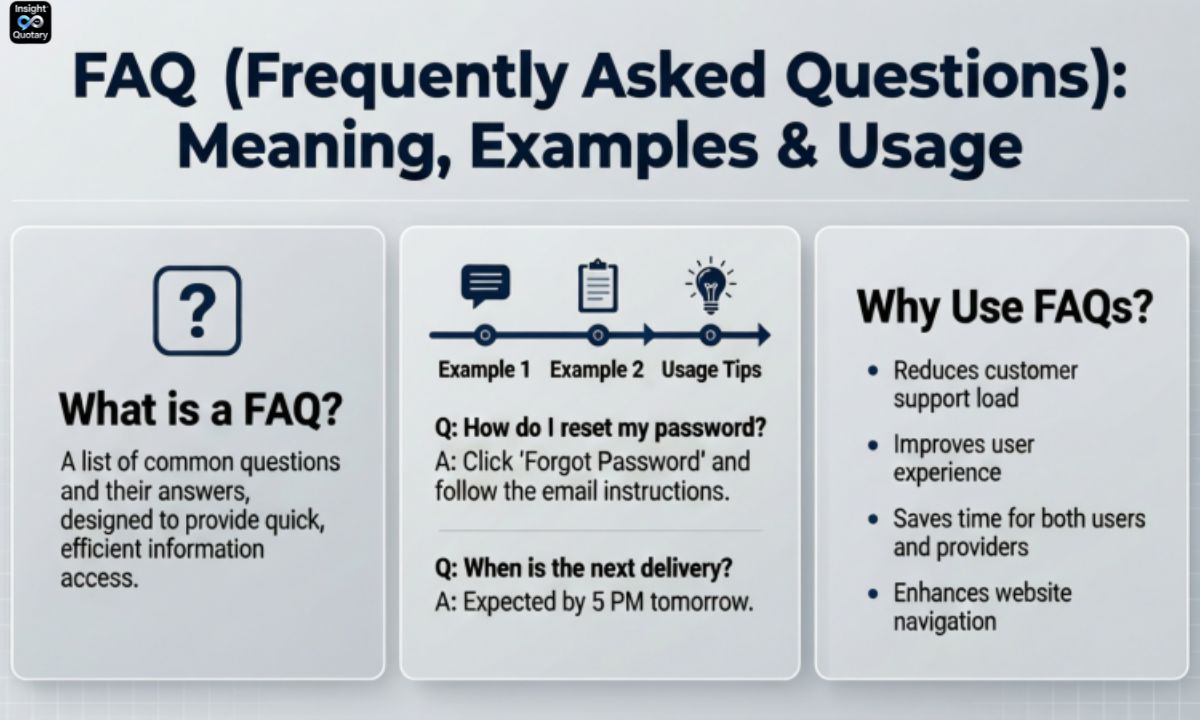
Ever wondered why every website has a “FAQ” section? Well, FAQ simply means “Frequently Asked Questions”. It’s like a shortcut to all the answers you’re probably looking for!
FAQs help you save time by listing the most common questions and their answers in one place. From online shopping to apps, you’ll find FAQs everywhere. It’s like having a tiny guidebook at your fingertips!
The best part? Using or reading FAQs is super easy and totally safe for everyone, even kids. Next time you’re stuck or curious, just check the FAQ and get instant answers no confusion, no hassle!
What is FAQ?
FAQ stands for “Frequently Asked Questions.” The FAQ (Frequently Asked Questions): Meaning is simple it’s a list of common questions people ask about a topic, along with clear answers. You’ll find FAQ sections on websites, apps, and even in text messages.
Understanding the FAQ (Frequently Asked Questions): Meaning helps you navigate online spaces better. Think of it as a shortcut to information. Instead of waiting for customer support, you check the FAQ and get instant answers.
What does FAQ stand for?
FAQ stands for “Frequently Asked Questions.” The FAQ (Frequently Asked Questions): Meaning is simply an abbreviation for sections where common questions get answered quickly and clearly.
What FAQ means in texting
The FAQ (Frequently Asked Questions): Meaning in texting is the same as online it refers to common questions and answers. However, people don’t use it as often in casual texts. You might see it in group chats when someone shares a link or directs others to find information.
When texting, FAQ works as digital communication shorthand. It tells the reader where to look for detailed answers without typing everything out. Here’s how the FAQ (Frequently Asked Questions): Meaning appears in texting:
- “Check the FAQ before asking again”
- “I added an FAQ to the group description”
- “The FAQ has all the event details”
Simple examples of using FAQ
Understanding the FAQ (Frequently Asked Questions): Meaning becomes easier when you see real examples. These FAQ usage examples show how different platforms use FAQ sections to help users find answers quickly and efficiently.
- “How do I reset my password?” Common on login pages
- “What are your shipping options?” Found on online stores
- “Do you accept PayPal?” Payment-related FAQs
- “How do I contact support?” Help center basics
- “Is my data safe?” Privacy and security questions
How to find FAQ on websites
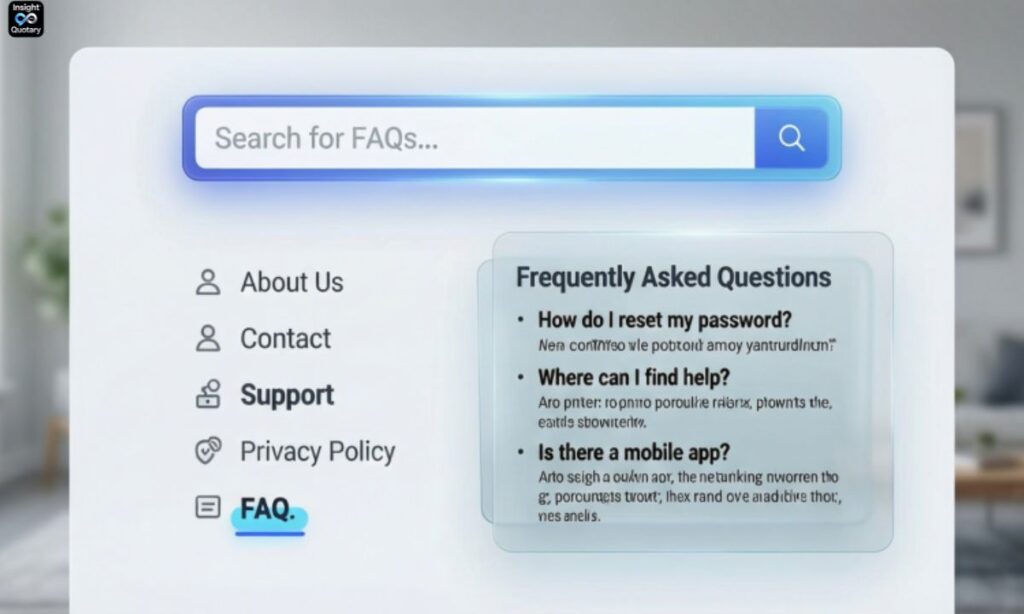
The FAQ (Frequently Asked Questions): Meaning becomes useful when you know where to look. Most websites place their FAQ section in easy-to-spot locations like the footer, header menu, or help center. Learning how to check FAQ sections saves you time and frustration.
- Scroll to the bottom of the homepage and look for “Help” or “FAQ”
- Check the main navigation menu for “Support” or “Resources”
- Use the search bar and type “FAQ” or your specific question
- Look for a “Contact Us” page FAQs are often linked there
| Website Type | FAQ Section Location | What You’ll Find |
| E-commerce | Footer or “Help Center” | Shipping, returns, payment options |
| Social Media | Settings or “Support” | Privacy, account issues, reporting |
| Tech Tools | “Resources” or “Docs” | Setup guides, troubleshooting tips |
Using FAQ on social media and chat
The FAQ (Frequently Asked Questions): Meaning on social media is slightly different from websites. Platforms like Instagram, Facebook, and Discord use FAQ sections to handle common user questions. You’ll find them in help centers or pinned messages in groups.
Understanding the FAQ (Frequently Asked Questions): Meaning in chat apps helps you communicate better. Many group admins create FAQ messages to avoid answering the same questions repeatedly. This keeps conversations focused and organized.
- Instagram uses FAQ stickers in Stories to answer follower questions
- Facebook groups often pin FAQ posts at the top for easy access
- Discord servers create FAQ channels with common server rules and info
FAQ vs Common Questions
The FAQ (Frequently Asked Questions): Meaning might seem identical to “common questions,” but there’s a subtle difference. FAQs are organized, documented, and publicly available for everyone. Common questions are just topics people ask often, but they might not be formally answered anywhere.
When you grasp the FAQ (Frequently Asked Questions): Meaning, you see it’s more structured. An FAQ section is intentionally created to address repeated concerns. Common questions exist in conversations, but FAQs turn them into permanent resources.
- FAQ Organized list with official answers Common Questions Random topics people ask
- FAQ Publicly accessible on websites Common Questions Asked privately in emails or chats
- FAQ Saves time for everyone Common Questions Require individual responses
| Aspect | FAQ | Common Questions |
| Format | Structured list | Informal, scattered |
| Accessibility | Public on websites | Asked individually |
| Purpose | Self-service help | Needs direct response |
Is FAQ safe for kids?
Yes, the FAQ (Frequently Asked Questions): Meaning itself is completely safe for kids. FAQ is safe slang for kids and simply refers to help sections on websites or apps. There’s nothing harmful about the abbreviation or the concept it’s just a tool to find answers.
- Teach kids to check FAQ sections before clicking unknown links
- Explain that FAQs provide helpful info without sharing personal details
- Monitor which websites’ FAQ sections your child visits regularly
How FAQ can save your time
The FAQ (Frequently Asked Questions): Meaning goes beyond just definitions it’s a major time-saver. Instead of waiting hours for email replies or sitting on hold with customer support, you get instant answers. FAQ online help puts solutions at your fingertips immediately.
- Get instant answers without waiting for customer service responses
- Skip long phone calls by finding troubleshooting steps in FAQ sections
- Avoid repeating questions check the FAQ first before asking
Beginner’s tips: How to use FAQ easily
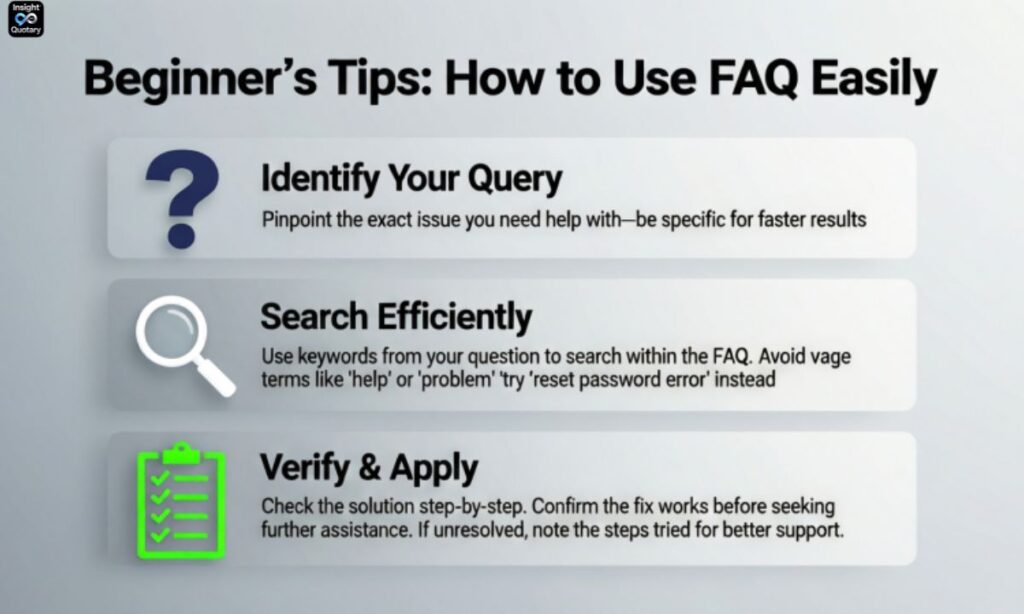
If you’re new to online browsing, grasping the FAQ (Frequently Asked Questions): Meaning might feel overwhelming at first. Don’t worry FAQ sections are designed to be simple and user-friendly. This FAQ guide for beginners will help you navigate them like a pro.
- Look for “FAQ,” “Help,” or “Support” links in website menus or footers
- Use Ctrl+F (or Command+F on Mac) to search for keywords in long FAQ pages
- Read the question fully before clicking it saves time and confusion
- Bookmark helpful FAQ pages for future reference
- If the FAQ doesn’t answer your question, use the contact form provided
Final Words
FAQs, or Frequently Asked Questions, make finding answers easy. They save time and help you understand things faster. Everyone can use them online or in apps.
Reading FAQs is simple and safe for kids too. They only list common questions and answers. No need to worry about tricky words or slang here.
Next time you are stuck or curious, check the FAQ section first. It’s like a small guide that gives you quick solutions. FAQs make life online much easier!
Frequently Asked Questions
What is FAQ (Frequently Asked Questions): Meaning?
FAQ stands for Frequently Asked Questions and shows common questions with their answers in one place.
How do I use FAQ (Frequently Asked Questions): Meaning online?
You check FAQ sections on websites or apps to quickly find answers to common queries.
Why is FAQ (Frequently Asked Questions): Meaning important?
FAQs save time, help solve problems fast, and guide users without extra support.
Is FAQ (Frequently Asked Questions): Meaning safe for kids?
Yes! FAQ just lists questions and answers, so it’s safe for children to read or use.
Can I create my own FAQ (Frequently Asked Questions): Meaning?
Absolutely! You can list common questions and answers for your website, blog, or project.
Where can I find FAQ (Frequently Asked Questions): Meaning examples?
Check online stores, apps, and forums most have FAQ sections to help users easily.

Liam is a content creator with 4 years of experience in Instagram Captions, Quotes, and Best Meanings. Now writing for InsightQuotary.com, he blends creativity and clarity to deliver fresh, engaging, and impactful content every day.