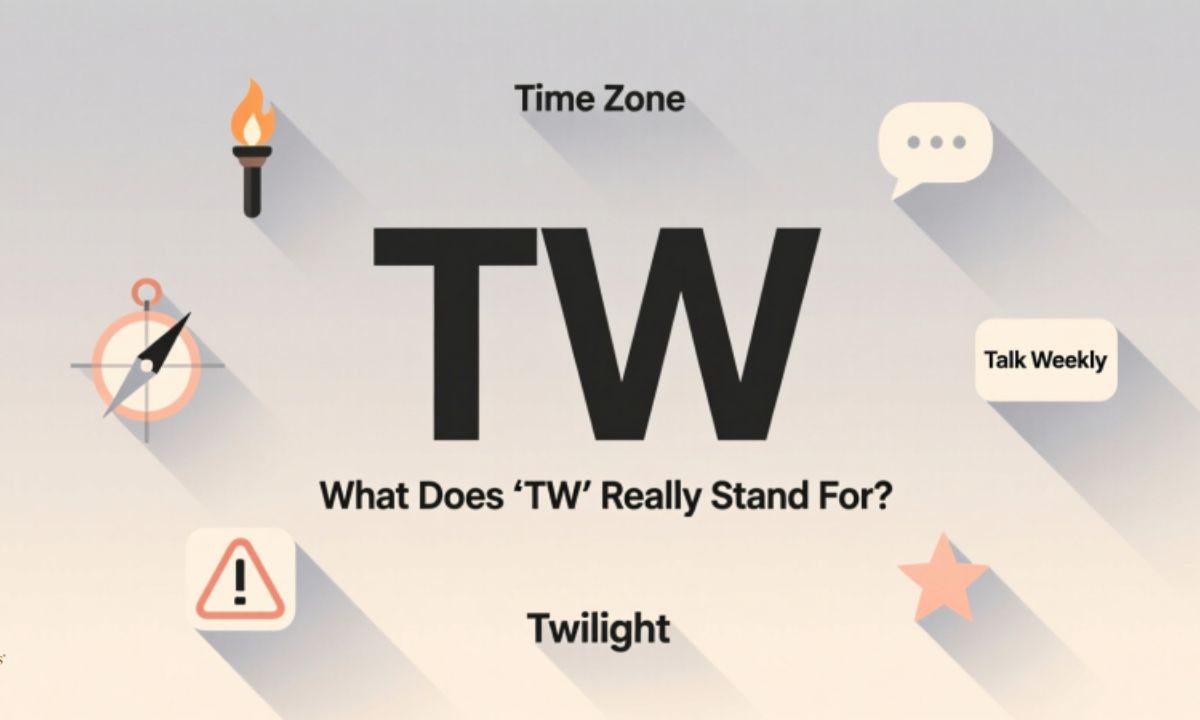
Ever seen someone write “TW” in a text and pause for a second like, wait… what does that mean? You’re not alone this tiny abbreviation shows up everywhere online and can mean different things depending on the situation.
In most cases, TW stands for Trigger Warning, but in work chats it can also mean This Week or Teamwork. Once you know the context, reading and replying to messages with “TW” feels easy, natural, and stress-free.
Meaning & Definition
The TW meaning in text stands for “Trigger Warning.” It’s a short heads-up people use before sharing content that might be upsetting or disturbing. You’ll see it all over social media, messaging apps, and online forums.
But context matters! Sometimes the TW meaning in text can also mean “This Week” in work emails or casual plans. The key is reading the situation to figure out which one the sender means. 🤔
- Trigger Warning :Alert for sensitive or potentially distressing content ⚠️
- This Week :Used in professional or scheduling contexts
- Teamwork :Occasionally used in workplace or group project discussions
Background & Origin
The TW meaning in text as “Trigger Warning” first gained traction in online mental health communities and forums during the early 2000s. It was originally used to help people with PTSD and trauma avoid content that could trigger flashbacks or anxiety attacks.
By the 2010s, the TW meaning in text exploded across social media platforms like Tumblr, Twitter, and Instagram.
What started as a mental health tool became standard internet etiquette, with users adding “TW” before discussing everything from violence to spoilers. Today, it’s one of the most recognized online slang meanings across all digital platforms.
Usage in Different Contexts
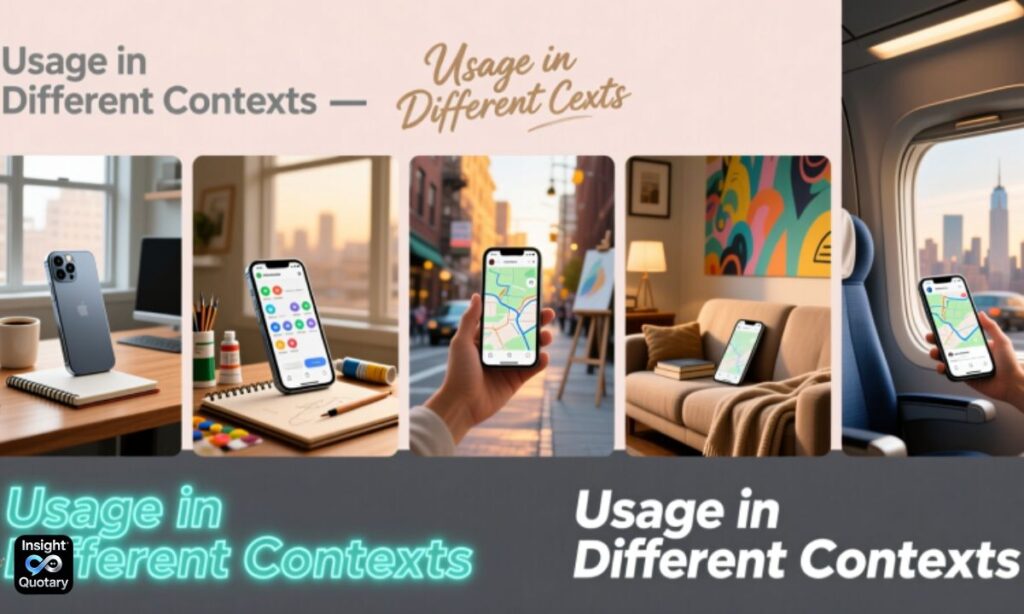
The TW meaning in text changes depending on where and how you’re using it. While “Trigger Warning” dominates social media, you might see totally different meanings in your work Slack or casual texts. Here’s how the context shapes what TW actually means. 💬
- Texting & Chat :Mostly means “Trigger Warning” when discussing heavy topics, but can mean “This Week” in casual planning 📱
- Social Media (Instagram, TikTok, Twitter) :Almost always “Trigger Warning” before sensitive posts, stories, or captions
- Work & Professional Settings :Often means “This Week” in emails, meeting notes, or project updates 💼
- Dating Apps :Used as “Trigger Warning” in bios or conversations to flag personal boundaries or sensitive topics
- Mental Health Communities :Strictly means “Trigger Warning” to protect members from distressing content
Meanings Across Platforms
The TW meaning in text isn’t one-size-fits-all it shifts depending on which platform you’re on. Instagram users see it differently than someone checking their work email. Let’s break down how the TW meaning in text changes across different digital spaces.
| Platform | Meaning | Example |
| Trigger Warning | “TW: discussing mental health struggles in today’s post” | |
| TikTok | Trigger Warning | “TW ⚠️ eating disorder mention” in video caption |
| Twitter/X | Trigger Warning | “TW: graphic news content in thread below” |
| WhatsApp/iMessage | This Week or Trigger Warning | “Let’s meet TW” or “TW: need to talk about something serious” |
| Work Email/Slack | This Week | “TW agenda: client meeting on Thursday” |
| Trigger Warning | “[TW: Violence] Discussion thread about true crime” | |
| Dating Apps | Trigger Warning | “TW in bio: discussing past trauma openly” |
Other Fields
Beyond texting and social media, the TW meaning in text pops up in professional and specialized contexts too. You’ll find it used differently in business communications, academic settings, and even creative industries.
- Business & Corporate :”TW” often means “This Week” in meeting agendas, project timelines, and status updates
- Academia & Research :Used as “Trigger Warning” in course syllabi, research papers, or classroom discussions involving sensitive material
- Publishing & Media :Editors and content creators use the TW meaning in text as “Trigger Warning” before articles, podcasts, or videos covering distressing topics
Common Misconceptions & Mistakes
People often misunderstand the TW meaning in text, leading to awkward mix-ups or misused warnings. The biggest confusion? Assuming TW always means the same thing regardless of context which definitely isn’t true.
- Confusing “This Week” with “Trigger Warning” :Reading “Meeting TW” as a trigger warning instead of a scheduling note causes unnecessary confusion
- Overusing trigger warnings :Slapping “TW” on everything dilutes its meaning and makes actual warnings less effective
- Mixing up TW and CW :Not knowing the difference between “Trigger Warning” and “Content Warning” (CW meaning in text is slightly broader)
- Using TW incorrectly in professional settings :Typing “TW” for “Trigger Warning” in a work email when everyone expects the TW meaning in text to be “This Week”
Similar Terms & Alternatives
The TW meaning in text has several cousins in the digital communication world. These related abbreviations serve similar purposes but have slight differences in how and when they’re used. Understanding these alternatives helps you choose the right warning for your content.
| Term | Meaning | Use Case |
| CW | Content Warning | Broader warning for potentially uncomfortable content; content warning vs trigger warning differs in intensity |
| TW | Trigger Warning | Specific alert for trauma-related or distressing material that may trigger emotional responses |
| NSFW | Not Safe For Work | Warning for explicit, inappropriate, or adult content that shouldn’t be viewed in professional settings |
| NSFL | Not Safe For Life | Extreme warning for extremely graphic or disturbing content (violence, gore) |
| Spoiler | Spoiler Alert | Heads-up that plot details or endings will be revealed |
| CN | Content Note | Gentler alternative to TW, listing sensitive topics without assuming triggers |
| Sensitivity Warning | Full phrase warning | More formal version used in professional or academic contexts |
How to Respond to “TW”
When someone uses the TW meaning in text in a message, knowing how to respond shows you understand and respect the warning. Your reply depends on whether you’re ready to engage with sensitive content or need to pass for now. 💬
- “Thanks for the heads-up” :Acknowledges the warning and shows appreciation for their consideration🙏
- “I’m good to read/hear it” :Lets them know you’re in the right headspace to handle the content✅
- “Can we talk about this later?” :Politely declines if you’re not ready to engage with the sensitive topic right now
- “What’s it about first?” :Asks for more context before deciding whether to continue 👀
- “Appreciate the TW I’ll skip this one” :Respectfully opts out without making things awkward
Differences From Similar Words
The TW meaning in text often gets confused with other warning abbreviations, but they’re not interchangeable. Each term has its own purpose and intensity level. Let’s clear up the confusion with a direct comparison.
| Term | TW Meaning in Text | Key Difference | When to Use |
| TW vs CW | Trigger Warning vs Content Warning | TW is for trauma-specific triggers; CW is broader and less clinical | Use TW for serious mental health topics; CW for generally uncomfortable content |
| TW vs NSFW | Trigger Warning vs Not Safe For Work | TW warns about emotional distress; NSFW warns about workplace-inappropriate content | TW for sensitive topics; NSFW for explicit/adult material |
| TW vs Spoiler | Trigger Warning vs Spoiler Alert | TW protects mental health; Spoiler protects entertainment experience | TW for distressing content; Spoiler for plot reveals |
| TW vs CN | Trigger Warning vs Content Note | TW assumes potential triggers; CN neutrally lists topics | TW in mental health spaces; CN in academic/professional settings |
| TW vs Disclaimer | Trigger Warning vs General Disclaimer | TW is specific to distressing content; Disclaimer covers legal/informational bases | TW for sensitive material; Disclaimer for liability or clarification |
Relevance in Online Conversations & Dating Apps
The TW meaning in text has become essential in online conversations and dating apps. It shows respect and emotional maturity when sharing personal stories. ❤️
On dating apps, the TW meaning in text appears in bios and chats when discussing sensitive topics. It creates safer spaces for vulnerability without causing unintentional harm. 📱
Popularity & Trends Over Time
The TW meaning in text exploded in popularity during the 2010s, especially on Tumblr and Twitter. What started in niche mental health forums became mainstream internet language, with Gen Z and millennials leading the charge across all platforms.
- Early 2000s :The TW meaning in text emerged in online PTSD support groups and trauma forums as a protective tool
- 2010-2015 :Tumblr and Twitter popularized TW, making the trigger warning meaning standard practice in social media etiquette
- 2020-Present :TikTok and Instagram normalized the TW meaning in text, with younger users applying it to everything from serious trauma to everyday discomforts
Examples of TW in Real Conversations

Seeing the TW meaning in text in action makes it way easier to understand. Here are real-world examples showing how people actually use TW in their everyday conversations across different platforms and situations.
- Instagram DM: “Hey, TW ⚠️ I’m gonna talk about my eating disorder recovery in my next post. Just wanted to give you a heads up since we’ve discussed this before.”
- Group Text: “TW: I need to vent about something that happened at work. It involves harassment so skip if you’re not in the headspace 😬”
- Twitter Thread: “TW // suicide mention. This thread discusses mental health struggles during lockdown. Please take care of yourselves 🧠”
- Work Slack: “Meeting scheduled TW – need everyone’s input on the quarterly report by Friday.” (Here the TW meaning in text is “This Week”)
- Dating App Chat: “TW before we meet: I have some anxiety around crowded places. Just wanted to be upfront about it!”
When Should You Use TW?
Knowing when to use the TW meaning in text is just as important as knowing what it means. You don’t need to warn about everything, but certain topics genuinely benefit from a heads-up before diving in. ⚠️
- Mental Health Topics :When discussing depression, suicide, self-harm, anxiety, or other mental health struggles that could trigger distress
- Violence & Abuse :Before sharing content about physical violence, sexual assault, domestic abuse, or trauma-related experiences
- Graphic Medical Content :When posting about injuries, medical procedures, blood, or health crises that might disturb sensitive viewers
- Eating Disorders & Body Image :Before discussing disordered eating, weight loss/gain details, or body-focused content
- Death & Loss :When sharing stories about death, grief, terminal illness, or traumatic loss that could affect those processing similar experiences
Final Words
Understanding the TW meaning in text helps you avoid confusion online.
It shows you care about context, feelings, and clear communication.
Whether it means Trigger Warning, This Week, or Teamwork, context matters most.
Now when you see “TW,” you’ll know exactly how to read it and reply with confidence.
Frequently Asked Questions
What is the TW Meaning in Text?
In texting, TW usually means Trigger Warning. It alerts readers that sensitive or emotional content is coming.
Does TW Meaning in Text always mean Trigger Warning?
Not always. In work or planning chats, TW can also mean This Week or Teamwork, depending on context.
How do people use TW Meaning in Text on social media?
People add TW before posts about mental health, trauma, or spoilers to give followers a heads-up.
What is the TW Meaning in Text on Instagram or TikTok?
On these platforms, TW mostly stands for Trigger Warning and appears in captions or comments.
Is TW Meaning in Text used in work messages?
Yes. In professional chats, TW often means This Week when discussing schedules or deadlines.
How should I reply when I see TW Meaning in Text?
A simple reply works, like “Thanks for the warning” or “Got it,” based on the conversation.
Why is TW Meaning in Text important to understand?
Knowing it helps you avoid confusion and shows awareness, respect, and good online etiquette.

Liam is a content creator with 4 years of experience in Instagram Captions, Quotes, and Best Meanings. Now writing for InsightQuotary.com, he blends creativity and clarity to deliver fresh, engaging, and impactful content every day.